
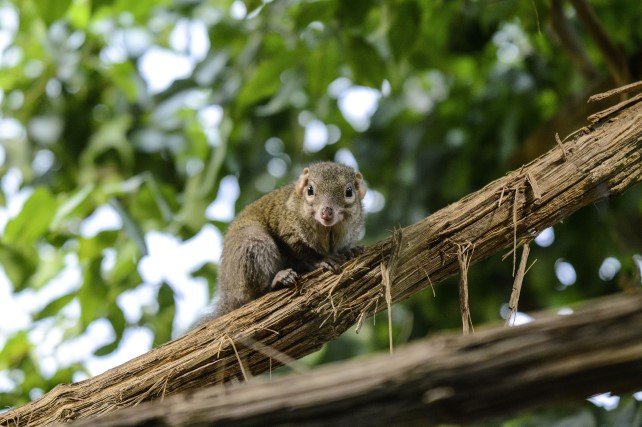
The Northern Tree Shrew (Tupaia belangeri) is a Tree Shrew species native to Southeast Asia.
In 1841, the German zoologist Johann Andreas Wagner first used the specific name Cladobates belangeri for treeshrews that had been collected in Pegu during a French expedition to Southeast Asia. These specimens were described by Isidore Geoffroy Saint-Hilaire in 1834 in whose opinion they did not differ sufficiently from Tupaia tana to assign a specific rank.
Results of a telemetry study involving northern treeshrews showed that their body temperature varies from 35 °C (95 °F) during the night to 40 °C (104 °F) during the day. This difference is larger than in other endotherms, and indicates that the circadian rhythms of body temperature and locomotor activity are synchronized.
Adults weigh 0.2 kg (0.44 lb). The maximum longevity of the northern treeshrew is 11 years.