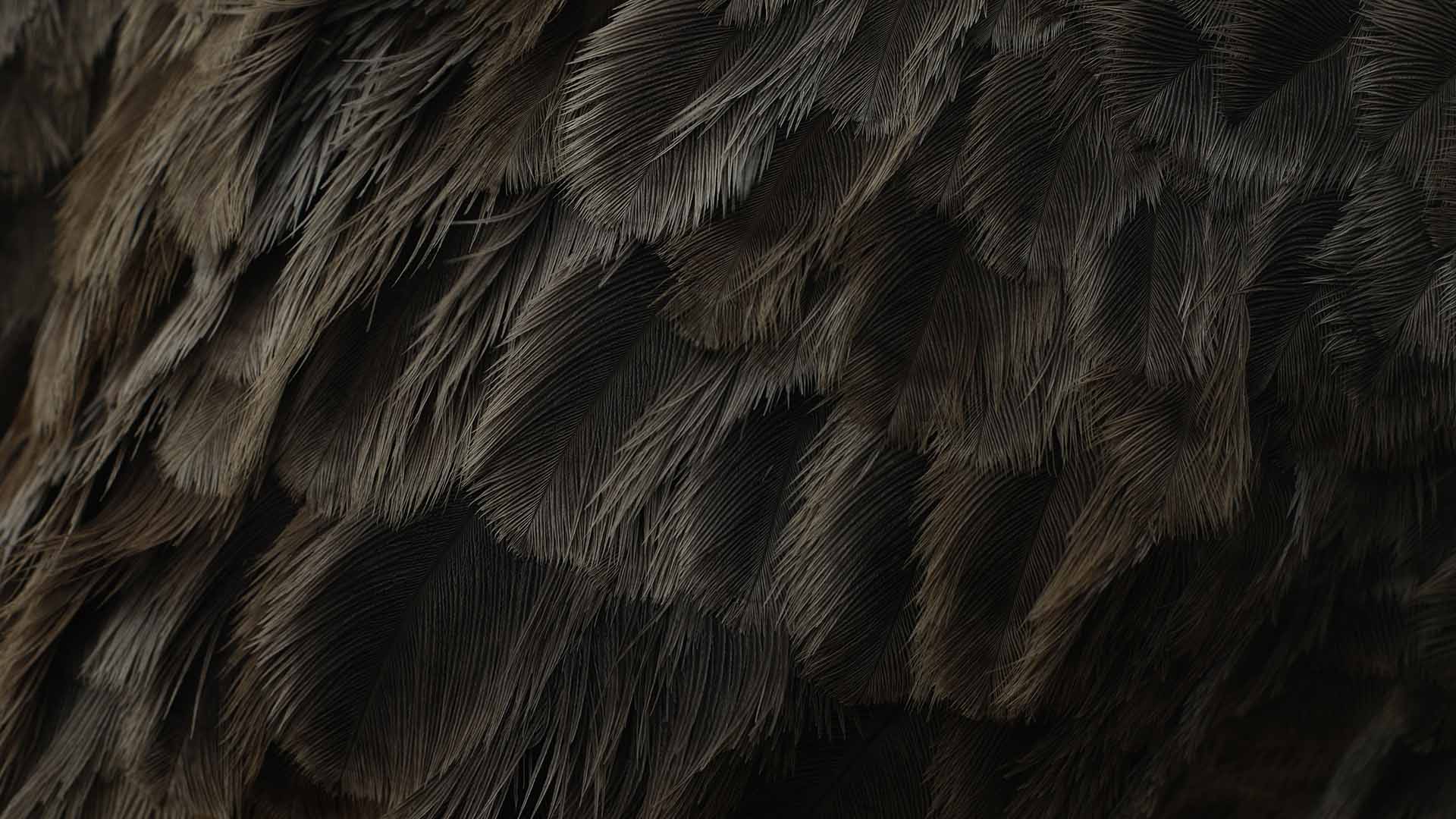
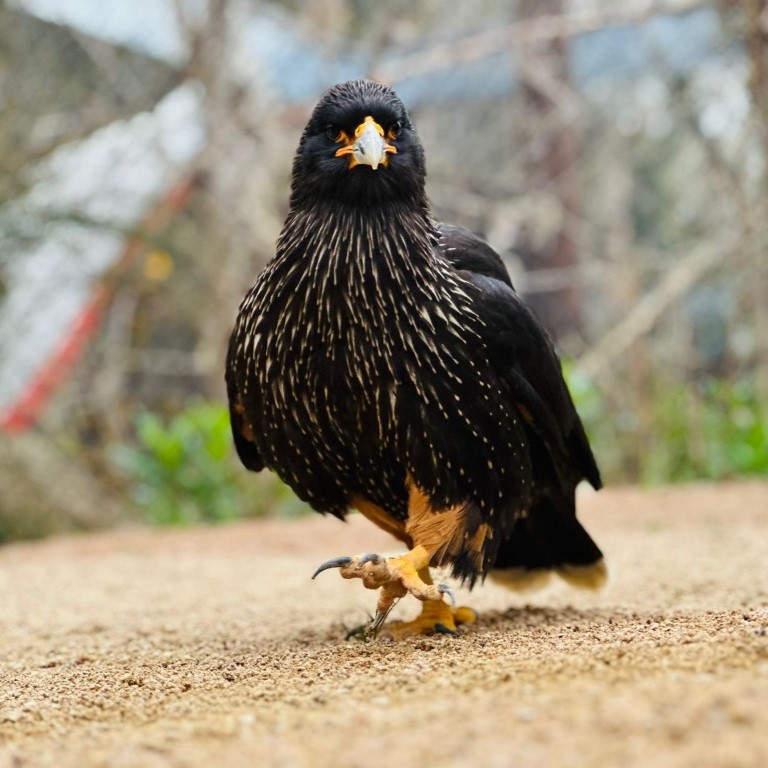
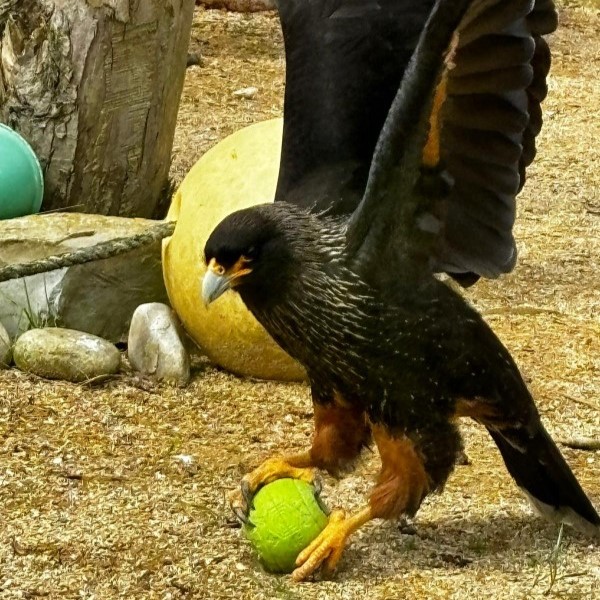
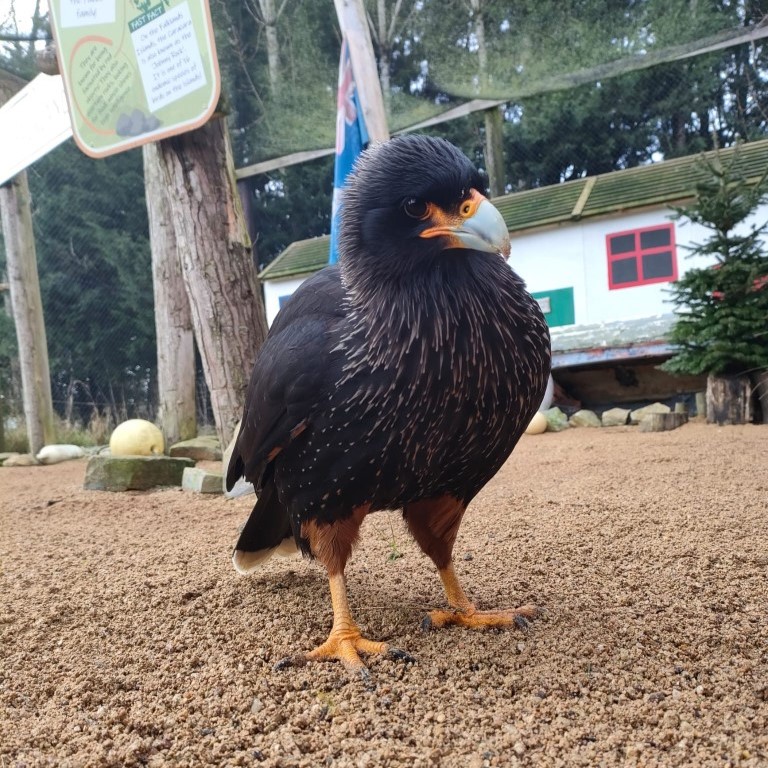
The striated caracara (Phalcoboenus australis) is a bird of prey of the family Falconidae. In the Falkland Islands, it is known as the Johnny rook, probably named after the Johnny penguin (gentoo penguin). The adults’ plumage is almost black in color, while the legs and lores are orange and the neck has silver striations. Chicks have chestnut down, which they lose after their first molt. Juveniles (i.e., after fledging until entering fourth year) have brown plumage with chestnut striations on nape and breast that deepen as they age. Full adult plumage is acquired after the fifth molt (i.e., entering fourth year), though the beak does not reach full adult coloration until the fifth year.
The species breeds on coastal islands off Tierra del Fuego, through the Chilean fjords, and the outer islands of the Falklands archipelago. Although logistical challenges prohibit a comprehensive survey of the mainland population, the Falklands is thought to be the species stronghold. Historical records indicate the species range may have included East Falkland, however striated caracaras now breed only in the outer islands in association with penguin and albatross colonies.
The striated caracara is primarily a scavenger, feeding on carrion, mainly dead seabirds and dead sheep, offal and food scraps. Invertebrates also comprise a large part of their diet, including kelp fly larvae dug from intertidal kelp wrack, beetles, and earthworms dug from invasive grasses in hillside drainages. However, striated caracaras will opportunistically prey on weak or injured animals, such as young seabirds and newborn lambs, the latter which has led it to be persecuted by sheep farmers.